Written By
OKLR Members
Published
01/07/2026
July 2026 Newsletter
7902 MotorRail Simplex "Amey"
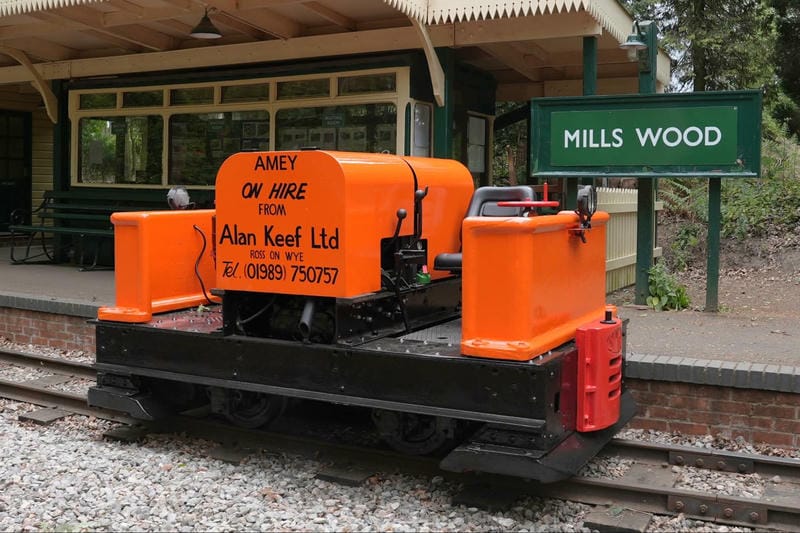 Amey stabled at Mills Wood following her restoration.
Donated to the OKLR by LEGOLAND in April 2025, Amey returned to the railway earlier in the year following a mechanical overhaul courtesy of previous owner Alan Keef Ltd. Once back at the OKLR, some adjustments were made to the gearbox selectors and a minor teething problem with some loose guides in the clutch became known after Amey was put through her paces for the first time. Consequently, Alan Keef sent two of their fitters who did an excellent job stripping, fixing and rebuilding Amey all within a single day.
Following Patrick Keef's advice, the dynamo which uses mechanical energy from the engine to keep the battery charged, was found to be badly corroded with historic water and soil ingress. For a time, Amey ran without the dynamo while it was repaired and refitted. This required removing a large number of pipes and filters which prohibited access to the mounting point.
Despite this, a constantly lit charging light indicated an electrical problem which was found to be due to a corroded regulator control box. A direct replacement was found online and, once fitted, resolved this problem. There was a final moment of panic when smoke was observed wisping from the new component but after a frantic trawl through the internet, it was found to be a normal occurrence as the preserving oil evaporated as it heated for the first time. Fortunately, the CO2 extinguisher on standby was not needed!
Amey's paintwork has been excellently restored by a dedicated team of OKLR volunteers to an orange livery reflecting Amey's time as a locomotive within Alan Keef Ltd's hire fleet. We believe this is a first in preservation but it has resulted in a few questions as to why we are hiring engines!
Amey hauled her first trains during a long awaited launch on 17th May and performed excellently throughout the day at the hands of numerous drivers! After a short period of remedial maintenance and tuning following a bedding-in period for the engine and drivetrain, Amey has been a regular fixture on our loco roster and is a favourite amongst volunteers.
We, at the railway, are all very proud to see this historic locomotive restored to operating condition and hauling passenger trains for the enjoyment of our volunteers and the visiting public alike. We would also like to thank all of our volunteers involved in bringing Amey to the railway and assisting in her successful restoration as well as Alan Keef's for their work and support on the mechanical restoration.
If you would like to learn more about Amey, we would strongly encourage you to visit our dedicated page at: https://oklr.org/rolling-stock/simplex/amey.
To see Amey in action, we recommend staying up-to-date with our operating schedule and loco roster at: https://oklr.org/visit-us.
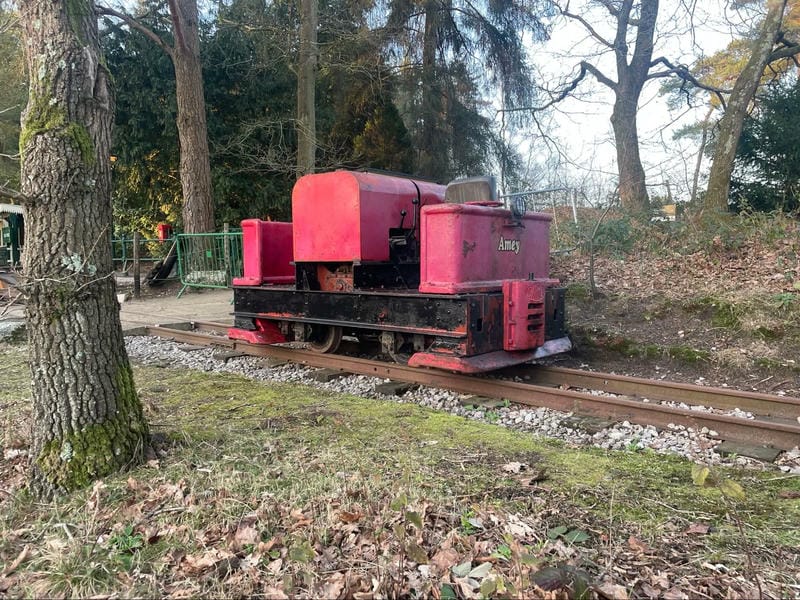
Amey stored in the Mills Wood headshunt ahead of restoration.
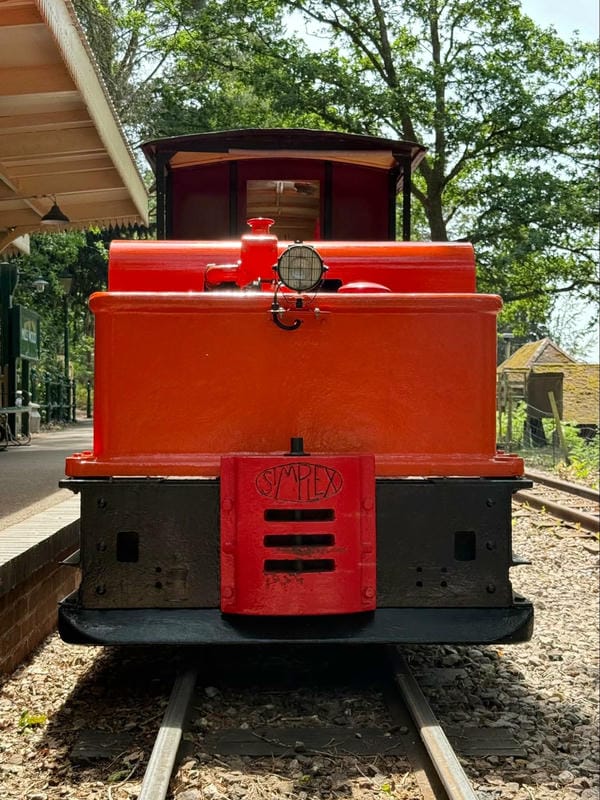
A brave photograph showing a towering Amey from the front! Photo: Alex Forshaw.
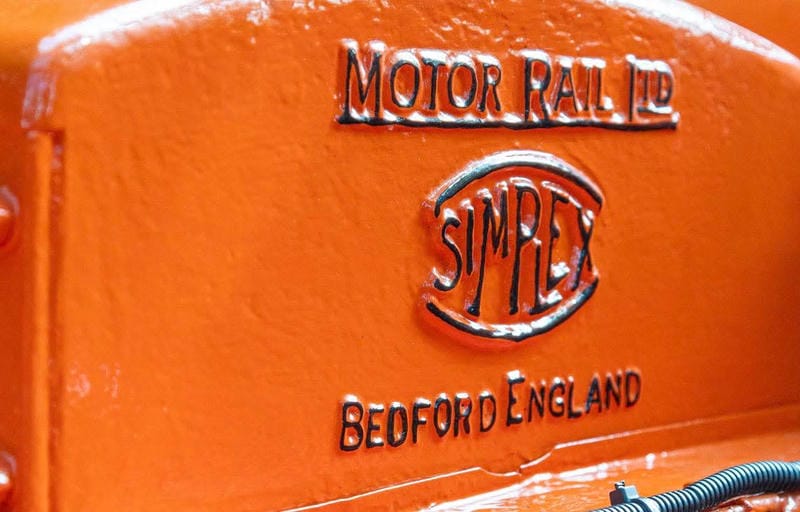
The Motor Rail Ltd. branding is excellently highlighted on Amey's radiator. Photo: Richard McKenzie.
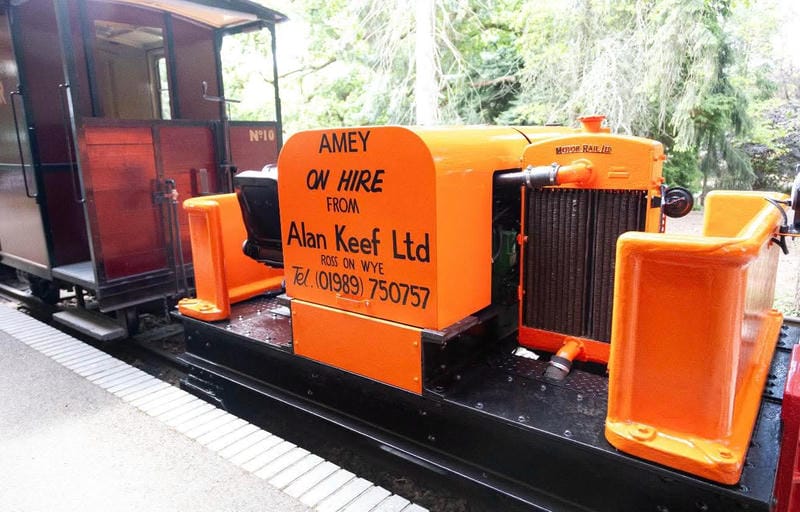
Amey is ready to haul her first ever OKLR train from the platform side. Photo: Richard McKenzie.
Diesel Updates
177639 "Sandrock" - Ian
A lengthy overhaul has been completed on the engine. This involved replacing a cylinder barrel, head and replacement big end bearings, as well as a fuel system overhaul. The injectors and pumps were sent away for specialist attention while a repair was made to the fuel tank which had corroded underneath and started to leak.
Once the fuel system had been refitted the injection timing had to be re-tuned from scratch, something I had yet to attempt - ever. This involved the use of dial gauges as well as the trusty tape measure, for measuring the flywheel diameter and finding the True top-dead centers of each piston at its firing stroke; then calculating the point at which the fuel pumps injected. Although I admit I picked Alex F's brains on that last part!
The engine was roughly timed and then managed its first run in many years at the Railway's social BBQ, causing some members to wander up at the familiar, yet unfamiliar noise coming from outside the diesel shed.
Although the engine ran and started, it was clear some adjustments were needed as one cylinder was faster to warm up and the engine sounded "knocky", this indicated that one side was working harder than the other. Despite this Sandrock was able to pull her first passengers, an after-service hire for a friend's Stag-train, even with some antlers mounted on the front.
Afterwards adjustments were made to the timing on both cylinders and now she runs much smoother. The following weekend rostered on passenger duty proved that she is still easy starting, clean running and capable with the open set.
There are a few outstanding things that would be nice to modify on the engine, but for now 1944 will be given attention.
Hudson-Hunslet No. 1944 - Ian
The lesser spotted Hudson-Hunslet has started to be dismantled to reach the troublesome clutch which failed a few years ago. One side of the cab, the exhaust and the seat have been removed to make access easier to the gearbox and flywheel.
The brake column has also been removed to enable the gearbox to be landed on a wooden support cradle currently being constructed although we are currently fighting the last stubborn bolt which is preventing us from lifting the gearbox out.
Otherwise, areas of wear are continuing to be identified for repair: after many years in industry and trundling along canal towpaths there is already quite the list.
Hibberd (Planet) FH.2528 - Ian
It's been a mixed year for this loco: a low oil pressure issue has plagued it for quite some time, but during the NGRS visit, an experimental tweak to the oil pump's pressure relief valve more than doubled the pressure. However, this success was short-lived as on a hot, busy day, a loose bolt caused a near-miss failure. After managing to drive itself back to the yard on one cylinder and with plenty of fumes emanating from the engine bay, Champion took over train duties while I inspected the root cause. Going inside a hot engine bay on a hot day wasn't high on my list of wants.
Upon inspection I found the rocker cover on one side had fallen down the side of the engine. The rocker cover has the lubricator wick feed for the inlet valve, so its loss had caused the valve to begin to stick and blow exhaust fumes back through the air filter.
The rocker cover bolts were very worn with damaged threads, and access to the top of the engine is limited by the cover. Once all the various pipes had been disconnected, Pen soon had the loco under the crane and lifted clear.
Alex F. has affected a repair by turning the head of the bolts down to allow more threads to contact. Hopefully we will see this loco back in action again soon.
5713 Simplex "Eagle" - James
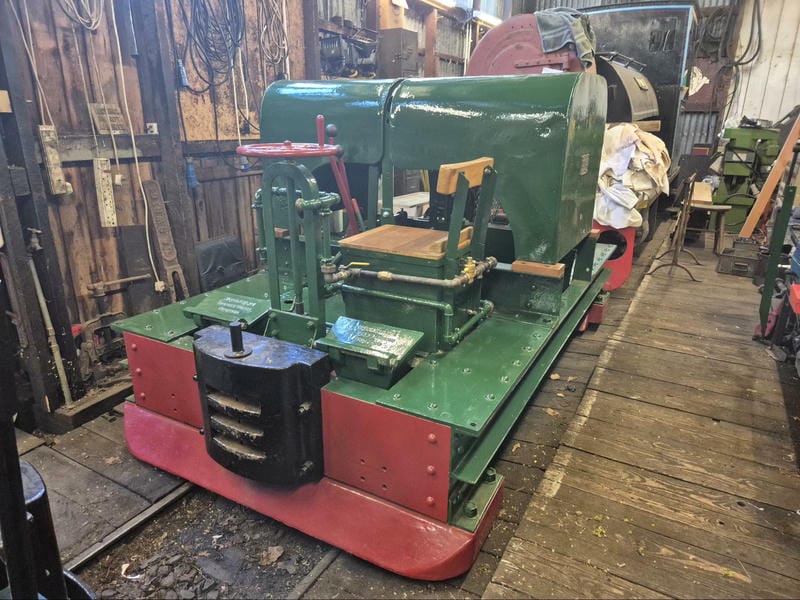 5713 minus a cab and engine. Photo: James Poyner.
Since the last update, work on 5713 has slowed a little but progress has still been made on getting the last few components cleaned and repainted. All the smaller components have now been processed and temporarily fitted until the engine has returned from being overhauled. This included the fuel tank, fuel tank hoops & straps, gear linkages, etc.
The cab has been repainted and fitted with a new roof canvas rather than roofing felt which, it was felt, gave the appearance of a garden shed. A little rot was discovered in one of the side supports and in the roof when the cab was cleaned and stripped of paint. This was rectified with hardener and filler ahead of re-painting.
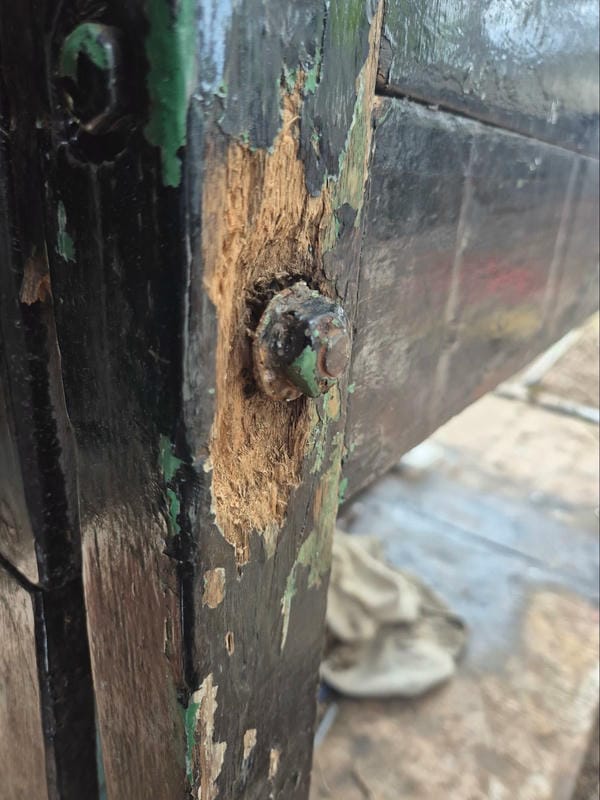 Rot on 5713's cab. Photo: James Poyner.
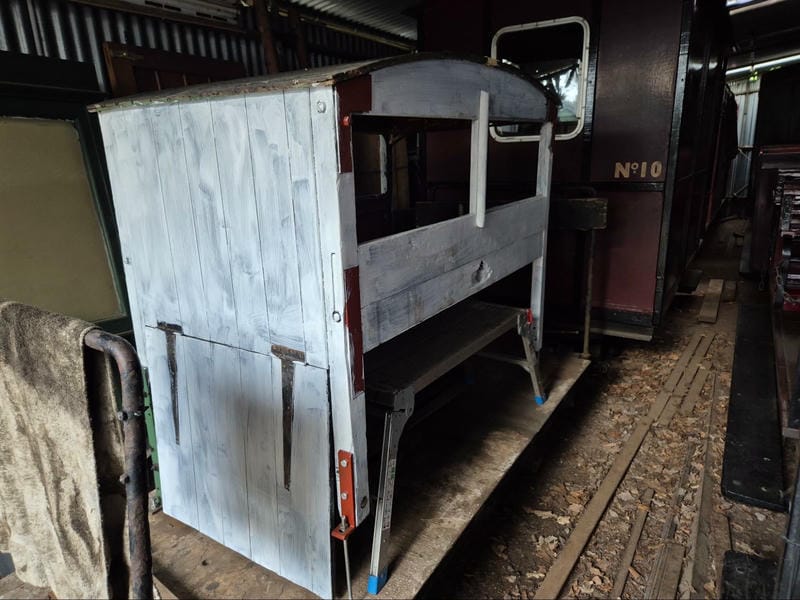 5713's cab after stripping, repairing and priming. Photo: James Poyner.
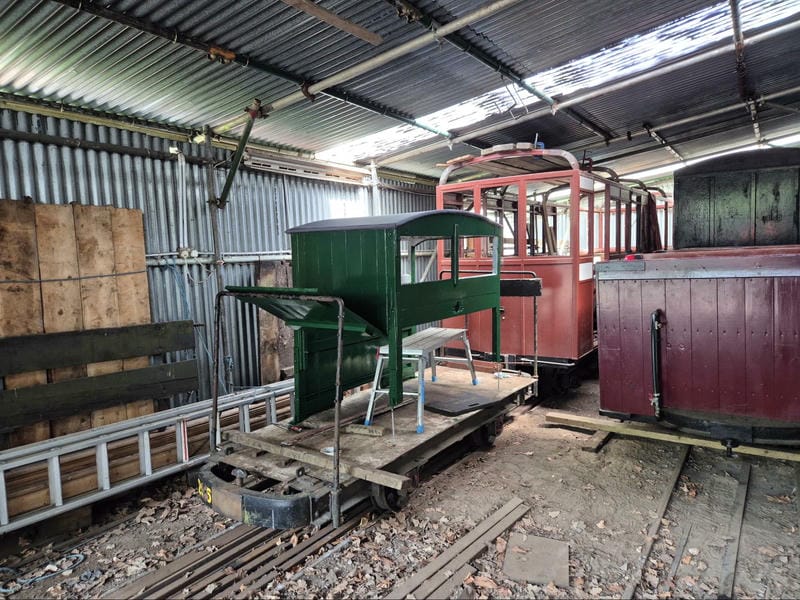 The cab after repainting. Photo: James Poyner.
Progress has also been made with fitting the air braking system. The train brake piping has been retrofitted as discreetly as possible without compromising the functionality. I am also putting provisions for an onboard air compressor to be fitted to the locomotive engine to supply the train air braking system as well as some whistles to provide an audible warning system. Trying to balance these modifications and practicality with sensitivity towards the history of the locomotive is taking time to achieve.
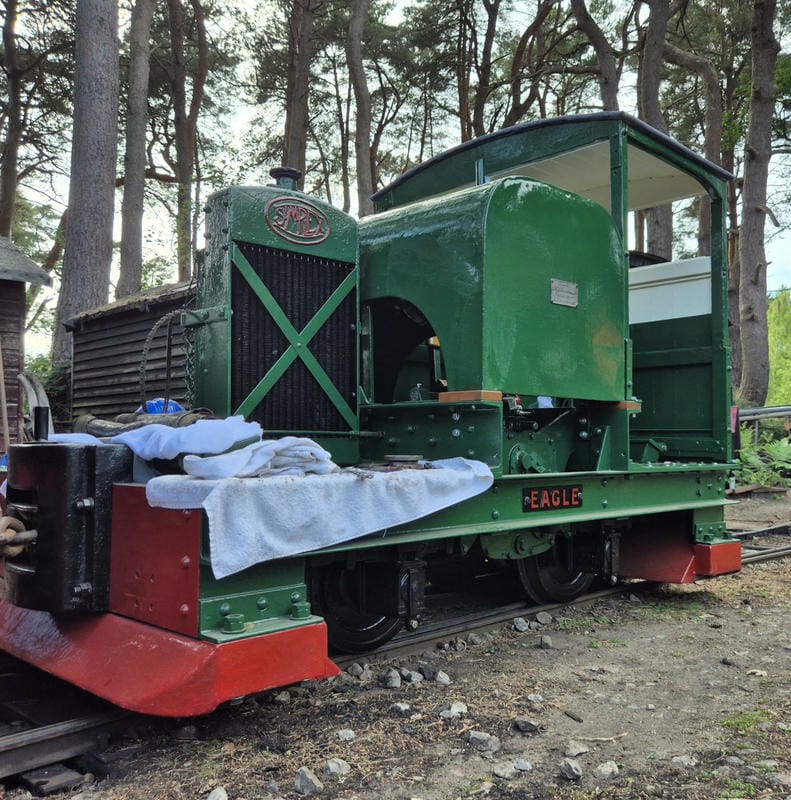 5713 with her cab refitted. Photo: James Poyner.
Steam Department Update - Alex F.
9998 Elouise
After running the Surrey Hills event we took Elouise out of traffic to carry out scheduled maintenance, also taking the opportunity to address some reported faults. We removed her ash pan and washout plugs, and washed out her boiler to prepare her for her annual inspection, and while the ash pan was off we modified its side door to improve access for cleaning. She passed her cold exam, and after putting her back together we performed an in-house steam test. This ensured she was in good shape to pass her steam test when the boiler inspector returned at the end of June, so she's now back in ticket for another year's service.
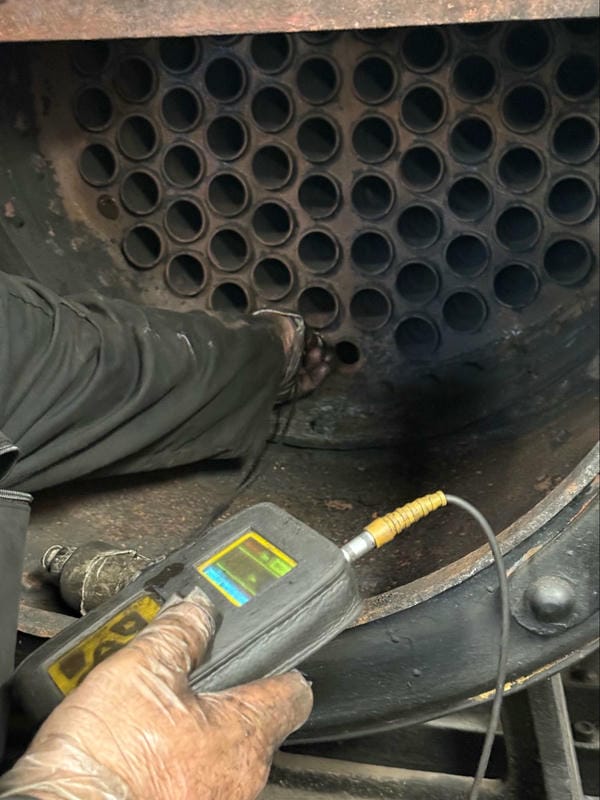 The boiler inspection test for the thickness of Elouise's smokebox tubeplate. Photo: Alex Forshaw.
20 Emmet
Our other operational loco, Emmet, passed her annual boiler exam in early April and following her FTR was back in service for the Village at War event in early May. We've carried out some maintenance tasks recently to improve the securing of the smokebox door and to adjust the brakes.
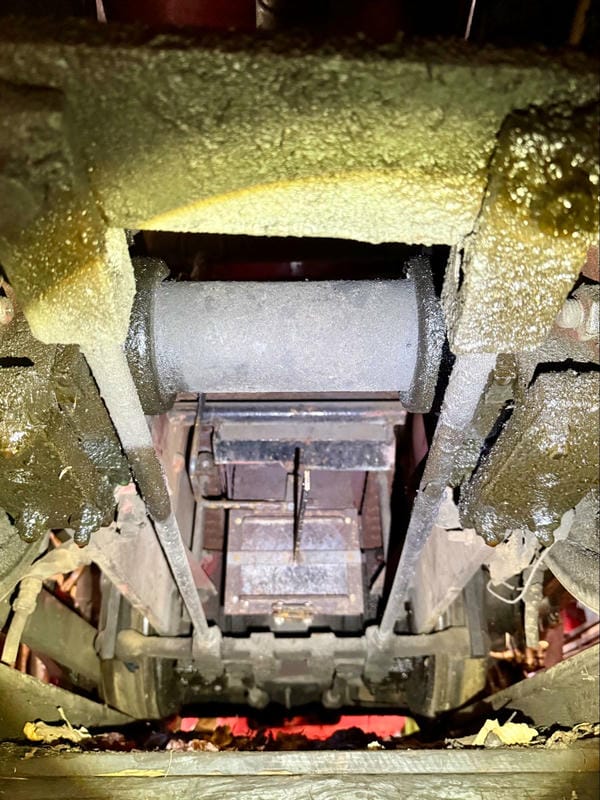 Underneath Emmett for her Fitness to Run (FTR) inspection. Photo: Alex Forshaw.
P-Way Update - Mill's Wood Siding
With the operating season in full swing, it is easy to forget about the infrastructure and maintenance required to keep the line open for the public and enable operations. Between running trains on a quiet Sunday, the permanent way department utilised the time by packing and levelling the new headshunt siding at Mills Wood. Created last year when the run-round loop was extended, the headshunt siding will be a useful asset to the railway for stabling loco's during busier events.
This process involved spreading a thin layer of fresh ballast along the siding and adjusting the track to level with rail jacks before using spades to manually pack the stones under the sleepers supporting rail height and providing a robust base for the siding. Bigger railways afford mechanical rail plants called ‘tampers' for this role, whereas we at the OKLR manage the old fashioned way with only weetabix and hand tools.
Once the track was levelled and packed, a final ballast drop was performed with shovels to bring the level of ballast up to restrain the sleepers from moving. All of us at the end of the task on a sunny June day were very hot and concluded there possibly are some benefits to doing track work in the winter!
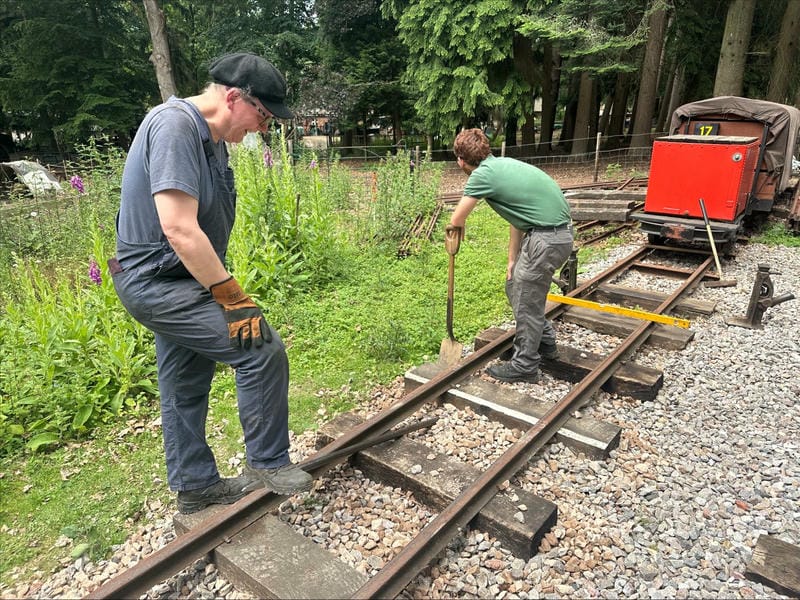 The permanent way department hard at work packing sleepers. Photo: Pen Harriss.
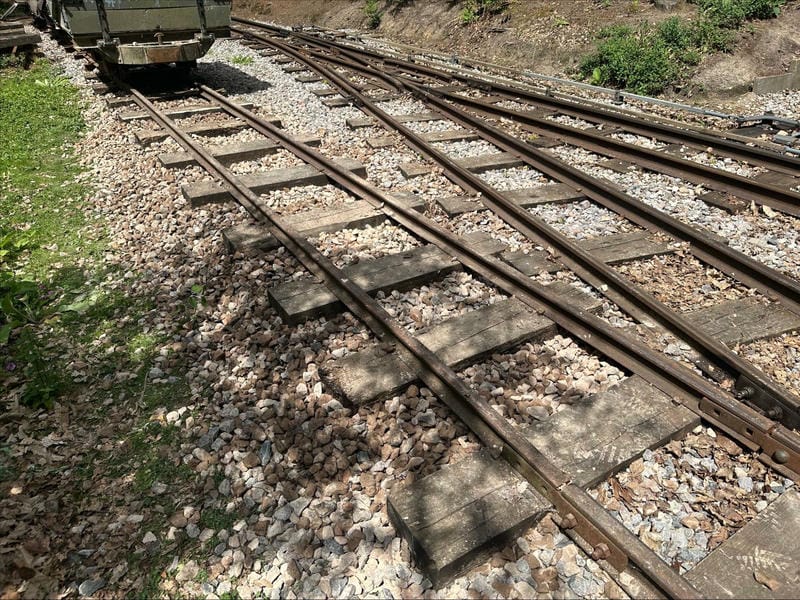 The finished siding. Photo: Pen Harriss.
Carriage & Wagon Update
Since the last update Baguley coach 1 and Penrhyn coach 3 have both received an annual air brake inspection and overhaul to ensure correct and safe operation for continued operation.
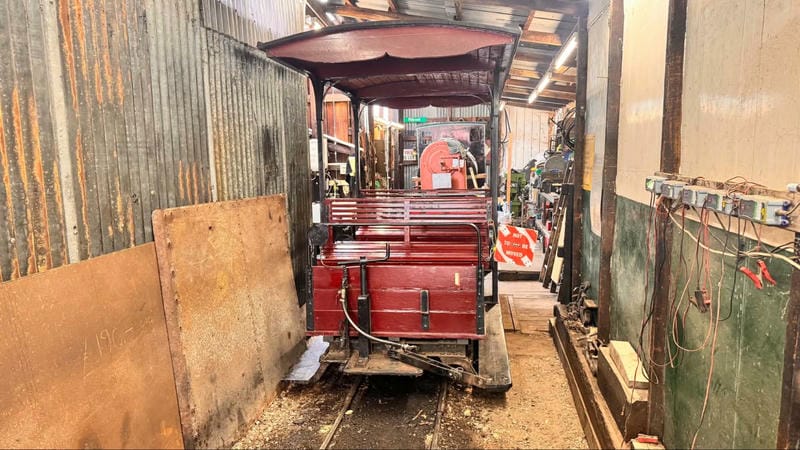
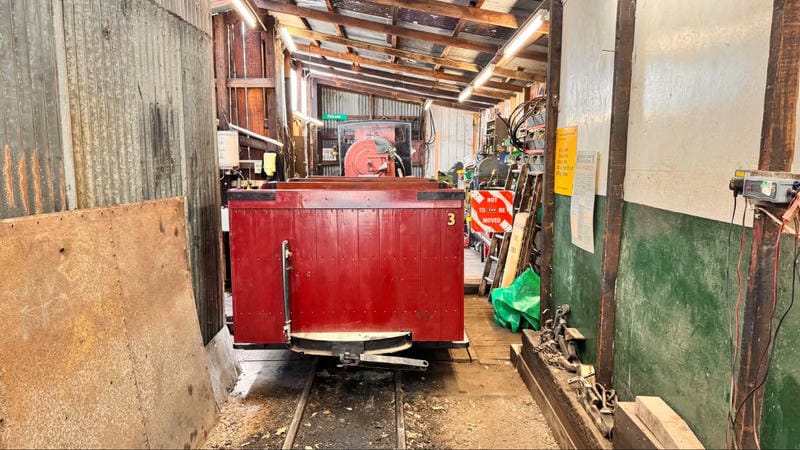
Coach 1 (left) and coach 3 (right) in the workshop for their air brake overhauls. Photo: Ryan McDonnell.
Chilmark wagon C69 has also reached a significant milestone after being repainted and flipped back onto its own wheels after a long-term restoration project. The next step towards reinstating the wagon for service is restoration of the wooden wagon bed.
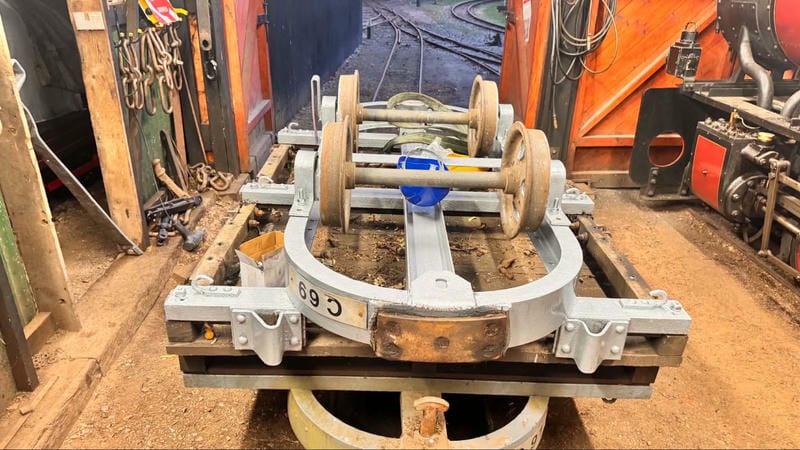
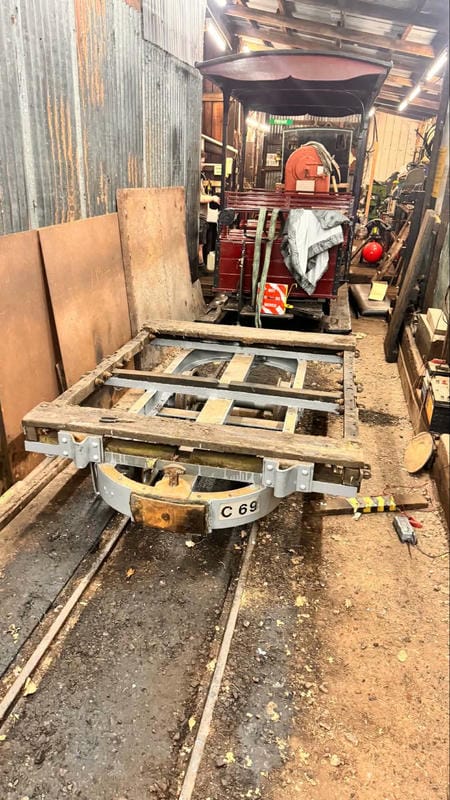
Wagon C69 before (left) and after (right) being righted onto its own wheels. Photo: Ryan McDonnell.
A Volunteer's Perspective - Alex Forshaw
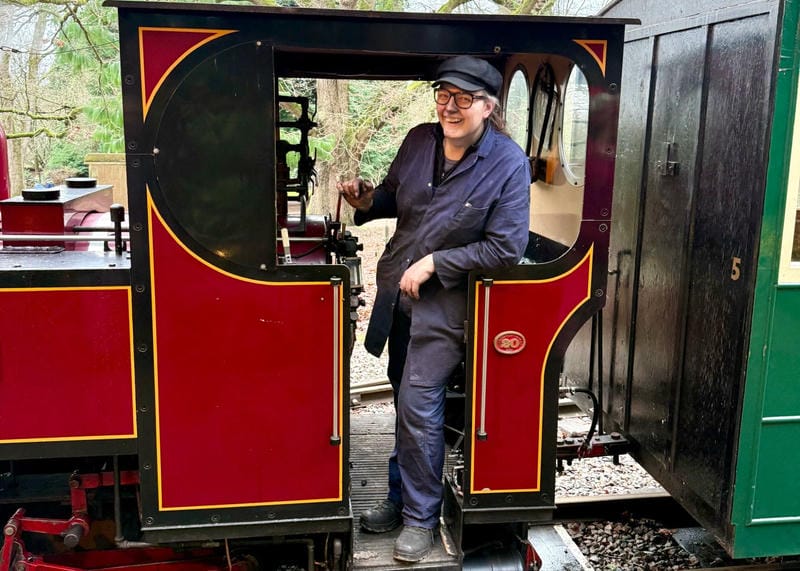 Alex enjoying a turn on Emmett's footplate during the Santa Specials. Photo: John Newman.
Looking back today I can hardly believe it's only been about nine months since I joined the railway: it's only in the last couple of years that I learned it even existed! With 2025 being a celebration of 200 years of railways I attended a number of rail-related events around the country and one of these, naturally, was the closest to home: the OKLR. Riding on trains and taking photos is all very well, but I wanted more. I wanted to get my hands on these wonderful machines and learn all about them, so when one of the lovely people I chatted to that day suggested volunteering I decided to take the plunge and sent an email. The rest, as they say, is history.
My interest in steam and desire to learn in detail how locomotives work led to me being taken on as the steam department's new apprentice. I've cleaned both of our operational "kettles", learning what most of the parts are and what they do. I've assisted in most of the regular maintenance tasks including lapping valves, performing steam tests, washing out boilers, and have assisted in preparing both locos for their annual exams. I've learned how to lay a fire and bring a loco into steam. I've even had a few turns on the footplate training as a fireman.
On top of that I trained as a guard, taking a number of turns under supervision and becoming increasingly confident in the role before being assessed and passed. It's an ideal way to become involved in train operations as you get to see pretty much every side of it, from looking after passengers to operating ground frames, shunting and coupling up. Guarding has allowed me to interact with our passengers, as well as to work alongside and get to know most of the other volunteers who operate the trains and stations on our running days.
That would be plenty by itself, but there's more: I've also been taking every opportunity I can to drive our diesel locomotives under supervision. I started with yard shunting using the Hunslet diesel-hydraulics and over time have progressed to training turns driving engineering and passenger trains up and down the line, as well as learning to operate many of our other diesel locos. In due course I hope to pass the driver assessment.
Another area of the railway I've assisted with is track work. I've pitched in with the work gangs several times now, realigning track, replacing sleepers, repairing points, and ballasting. Lots of healthy exercise out in the fresh air. You don't need a gym membership when you spend a day on the shovel: I feel fitter than I have in years! Alongside the track work - literally - is the S\&T infrastructure where I've been able to help install new support stools for the point rodding in the yard.
I'm lucky that I have time most weekends to spend at the railway. I love engineering and working with my hands, and I'm always keen to learn something new. There are many things I love about volunteering at the OKLR: the opportunities to get involved in so many different areas, picking up new skills and knowledge, and especially getting to know the other volunteers. It's one of the most rewarding experiences I've had in my life and I hope to be a part of this family for many years to come.